
Description
Product Overview
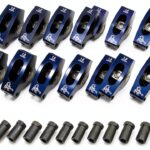
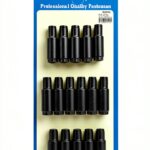
PRW’s left hand lock nut is engineered specifically for high‑performance automotive applications where reliability and strength are paramount. Constructed from premium alloy steel, the fastener combines corrosion resistance with exceptional tensile strength, ensuring it can withstand the demanding forces present in modern engines. The lock‑type design incorporates a built‑in prevailing torque feature that resists loosening under vibration, a common challenge in performance rocker arm assemblies. By integrating a left‑hand UNC thread, the nut provides a unique reverse‑rotation capability that simplifies installation and removal when conventional right‑hand threads would interfere with surrounding components. This thoughtful engineering makes the part an ideal choice for enthusiasts and professional mechanics seeking a dependable solution that delivers both durability and ease of service.
Key specifications highlight a compact 5 × 4.3 × 2.3 inch package that fits easily into standard automotive tool kits, while the 7.7‑ounce weight balances robustness with manageable handling. The nut conforms to Class 2A thread standards, providing precise engagement and consistent preload across a range of torque settings. Its left‑hand thread style follows Unified National Coarse (UNC) specifications, ensuring compatibility with a broad selection of OEM and aftermarket components. The part number 1200246, also referenced as the JEGS model, aligns with the original equipment manufacturer’s catalog, making it a direct replacement for worn or damaged originals. Detailed product dimensions and UPC 842864002758 further simplify inventory management for distributors and repair shops.
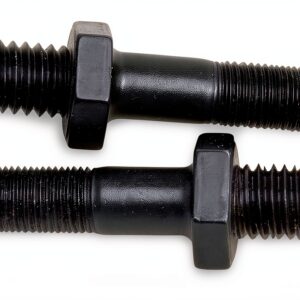
The alloy steel composition is heat‑treated to achieve a hardness level that resists deformation under high cyclic loads, a critical factor for engine components that experience rapid temperature fluctuations. In addition, the lock nut’s prevailing torque is calibrated to maintain a secure grip without requiring excessive tightening force, reducing the risk of thread stripping or bolt head damage. Its design also incorporates a smooth, rounded head profile that distributes load evenly across the fastening surface, minimizing stress concentrations that could lead to premature failure. Together, these attributes provide a reliable fastening solution that supports engine efficiency and longevity, even in demanding racing or off‑road environments.
PRW’s manufacturing process adheres to ISO‑9001 quality management standards, with each nut undergoing rigorous dimensional inspection and torque testing before leaving the facility. The company’s commitment to traceability means that every batch is linked to its production lot, allowing quick identification of any anomalies and facilitating efficient recall procedures if necessary. This level of oversight not only guarantees consistent performance across thousands of units but also provides peace of mind to distributors and end‑users who rely on precise fit and function. By choosing this lock nut, customers benefit from a product that reflects meticulous engineering, stringent testing, and a legacy of automotive expertise.
Designed to meet the exacting standards of both OEM and aftermarket performance engines, the PRW left hand lock nut fits a variety of popular makes such as Ford, Chevrolet, and Dodge where left‑hand rocker arm studs are employed. The nut’s dimensions and thread pitch align with the original specifications for models ranging from early 2000s V8s to newer high‑output powerplants, allowing seamless substitution without the need for custom machining. In addition, the alloy steel composition maintains its mechanical properties after repeated heating cycles, making it suitable for engines that undergo frequent rebuilds or upgrades. By adhering to the same tolerances as factory‑installed hardware, the nut ensures that torque distribution remains balanced, reducing the risk of uneven wear on the rocker arm assembly.
Each PRW lock nut is individually packaged in a compact 5 × 4.25 × 2.25 inch box, weighing approximately 0.6 lb, which optimizes storage space and reduces shipping costs. The packaging material is recyclable and meets industry standards for safe transport, protecting the fastener from moisture and impact during handling. For bulk orders, the nuts can be supplied in bulk cartons with clear labeling of part numbers and UPC codes, facilitating efficient inventory management in large service centers. The environmentally conscious approach aligns with PRW’s sustainability initiatives, ensuring that both the product and its packaging contribute to responsible automotive maintenance practices.
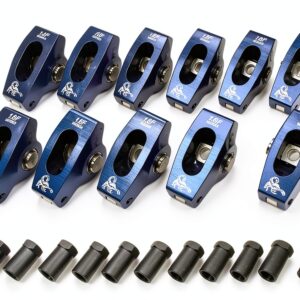
![[Product front view showing all components]](https://www.norano.store/wp-content/uploads/2026/06/83dd032333ad45f891634f9dc723eedc.jpg)
Usage
Installation of the PRW left hand lock nut is straightforward for technicians familiar with standard fastener practices. The nut is intended for use on rocker arm studs that require a left‑hand thread, typically found in high‑performance or aftermarket engine builds where conventional right‑hand threads would clash with adjacent components. To install, first clean the mating surface and apply a thin layer of anti‑seize compound if desired, then thread the nut by turning it clockwise, which, due to its left‑hand orientation, actually tightens the connection. Proper torque values are usually specified by the engine manufacturer, but a general range of 15‑20 lb‑ft provides a solid clamping force without over‑compressing the stud.
During routine maintenance, the lock nut’s prevailing torque feature helps prevent accidental loosening caused by engine vibration, reducing the need for frequent re‑torquing checks. When removal is required, the left‑hand orientation allows the nut to be unscrewed by turning it counter‑clockwise, a motion that is opposite to most standard fasteners and can be advantageous in tight engine bays where space constraints limit tool access. Technicians should always verify the thread direction before applying force to avoid cross‑threading, and they may use a torque wrench with a left‑hand setting to achieve precise tightening.
The lock nut is also suitable for other applications that benefit from a left‑hand thread, such as certain suspension components, transmission brackets, or custom‑fabricated assemblies where a reverse‑threaded fastener simplifies alignment. Its compact size and moderate weight make it easy to stock in service bays, and the universal alloy steel material ensures compatibility with a wide range of lubricants and sealants. By following the manufacturer’s installation guidelines, users can achieve a secure, long‑lasting connection that contributes to overall vehicle reliability.
To achieve optimal results, technicians should use a calibrated torque wrench equipped with a left‑hand adapter, which allows accurate measurement while turning the nut in the correct direction. Selecting a socket that matches the nut’s hex head size prevents rounding of the corners and ensures even force distribution. For high‑performance builds, it is advisable to apply a thin film of high‑temperature thread locker after torquing, which adds an extra layer of security without compromising the lock nut’s built‑in prevailing torque. Regularly inspecting the fastener after the first 100 miles of operation can reveal any early signs of movement, allowing corrective action before the component experiences excessive stress.
Why Choose Us
PRW has built a reputation over decades as a trusted supplier of high‑quality fasteners for the automotive industry. Each lock nut is produced in a controlled environment where advanced forging and heat‑treatment processes are monitored to achieve consistent material properties. The company’s engineering team collaborates closely with OEMs and performance specialists to refine thread geometry and lock mechanisms, ensuring that the final product meets the rigorous demands of both stock and modified engines.
The alloy steel used in this nut undergoes a proprietary quenching and tempering cycle that yields a hardness level comparable to premium aerospace fasteners, yet remains cost‑effective for everyday repair shops. This treatment not only enhances tensile strength but also improves resistance to corrosion and fatigue, extending the service life of the component even under extreme temperature cycles typical of high‑performance driving. Customers therefore benefit from a part that delivers both performance and value.
PRW provides dedicated after‑sales support and a warranty, ensuring customers receive assistance with fitment questions, installation guidance, and any potential issues, reinforcing confidence in the purchase. Their knowledgeable team can help troubleshoot problems and recommend complementary fasteners for optimal system performance.
Beyond the product itself, PRW invests in continuous research and development to stay ahead of evolving engine technologies. The company’s engineers regularly test new alloy formulations and lock designs in simulated high‑stress environments, gathering data that informs future improvements. This proactive approach means that customers receive fasteners that are not only current but also future‑proof, capable of handling emerging powertrain trends such as turbocharging and hybrid integration. By partnering with PRW, distributors gain access to a pipeline of innovative solutions that keep their inventory relevant and competitive in a fast‑moving market.
Key Features
- Premium alloy steel construction delivers high tensile strength and corrosion resistance, ensuring the nut endures demanding engine environments. Its heat‑treated finish further enhances durability, providing a long‑lasting solution that maintains performance over many service cycles.
- Left‑hand UNC thread provides reverse rotation capability, simplifying installation in tight engine bays where conventional right‑hand threads would interfere. This design reduces the need for additional adapters and speeds up assembly time for performance builds.
- Prevailing torque lock mechanism resists vibration‑induced loosening, delivering a secure connection that minimizes re‑torquing checks during regular vehicle operation. This reliability is especially valuable in high‑performance or off‑road applications where constant engine movement can compromise standard fasteners.
- Compact dimensions (5 × 4.3 × 2.3 in) and lightweight design (7.7 oz) make the nut easy to handle and store, fitting seamlessly into standard automotive tool kits. Its size also allows for quick inventory turnover and reduces the space required for parts organization in busy service environments.
- PRW provides dedicated after‑sales support and a warranty, ensuring customers receive assistance with fitment questions, installation guidance, and any potential issues, reinforcing confidence in the purchase. Their knowledgeable team can help troubleshoot problems and recommend complementary fasteners for optimal system performance.
FAQ
What is the correct torque specification for this lock nut?
The recommended torque for the PRW left hand lock nut typically falls between 15 and 20 lb‑ft, depending on the specific engine application and the material of the mating stud. For most standard rocker arm installations, applying 18 lb‑ft using a calibrated torque wrench will achieve the proper preload without over‑compressing the threads. It is important to consult the vehicle’s service manual for any manufacturer‑specific values, especially in high‑performance or racing setups where tighter tolerances may be required. Using a torque wrench with a left‑hand setting ensures accurate measurement and helps maintain the nut’s prevailing torque characteristics, extending the life of the fastener. Always verify the torque reading before final tightening and re‑check after the engine reaches operating temperature to confirm the fastener remains secure.
Can this lock nut be used on right‑hand threaded applications?
No, the PRW lock nut is specifically designed with a left‑hand UNC thread, which means it will tighten when turned clockwise and loosen when turned counter‑clockwise. This reverse threading is intended for applications where a standard right‑hand thread would interfere with other components or where a reverse‑rotation fastener simplifies assembly. Using the nut on a right‑hand threaded stud would result in improper engagement and could lead to premature failure. For right‑hand applications, PRW offers a complementary lock nut with standard threading that provides the same material quality and lock features. When selecting a fastener, always verify the thread direction indicated on the part drawing to ensure compatibility and avoid installation errors that could compromise engine performance.
What maintenance practices help extend the life of this lock nut?
Regular inspection of the lock nut during scheduled service intervals helps detect early signs of wear, corrosion, or thread damage. Clean the nut and mating surface with a suitable solvent to remove oil, grime, and debris before re‑installation. Applying a light coat of anti‑seize compound can prevent galling, especially in high‑temperature zones, while still allowing the prevailing torque feature to function correctly. Replace the nut if the threads become stripped or if the lock mechanism no longer provides the expected resistance. Keeping the fastener within the recommended torque range and avoiding over‑tightening are also critical to maintaining its integrity over the vehicle’s lifespan.
Is this lock nut compatible with JEGS part numbers?
Yes, the PRW lock nut is listed under the JEGS catalog as part number 1200246, matching the OEM specification for many popular performance engines. The UPC 842864002758 also aligns with JEGS inventory, making it easy to locate and order through their online platform or authorized distributors. This cross‑reference ensures that mechanics can replace original equipment without searching for obscure part numbers, streamlining the repair process. When ordering, verify the vehicle make, model, and engine type to confirm that the left‑hand thread orientation matches the intended application.
 Harland Sharp Auto Rocker Arm Shafts for Performance
Reviews
There are no reviews yet.